

Why color matching matters, and why we built it in
When working with multi-channel projection, color consistency is not a “nice to have”, it’s fundamental. Even small variations between projectors are immediately visible to the human eye, particularly across overlapping surfaces. This is why P7 color matching is a core part of the UNIFY™ electronics set in all Norxe projectors, not an optional afterthought.
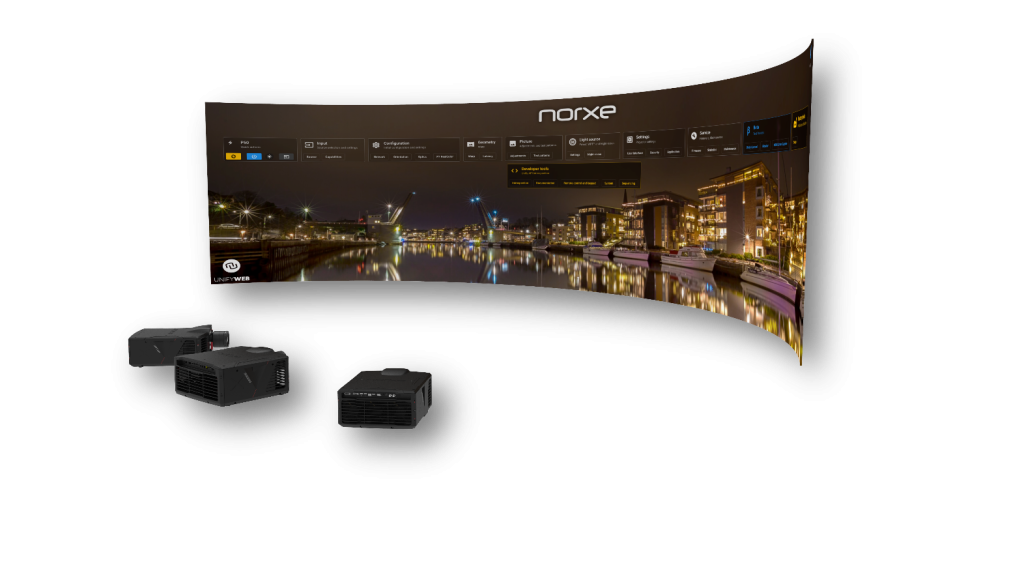
P7 color matching is designed to deliver predictable, repeatable color performance across every channel in a system. Whether you’re building a simulator, a themed attraction, or any other multi-projector installation, the objective is straightforward: every projector should behave as one. The same white point. The same color gamut. The same perceived brightness.
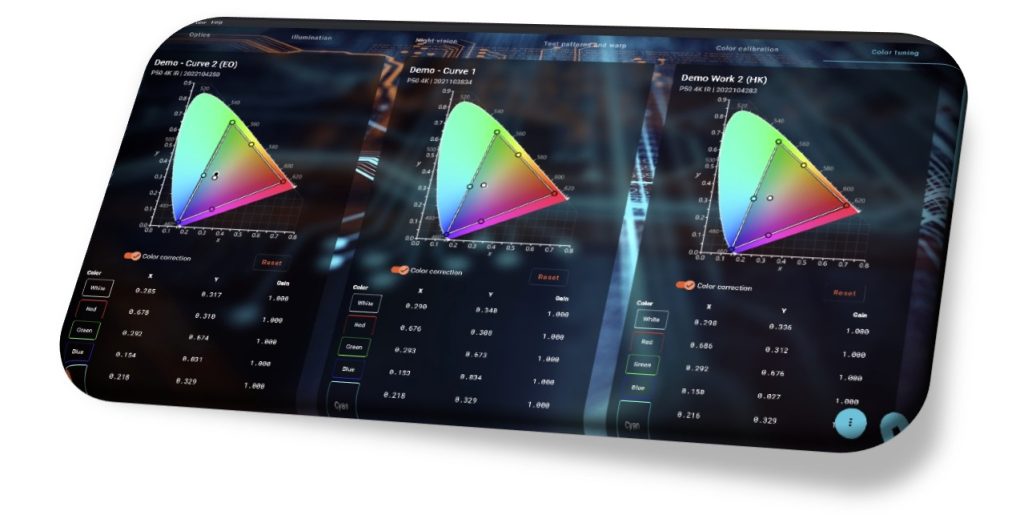
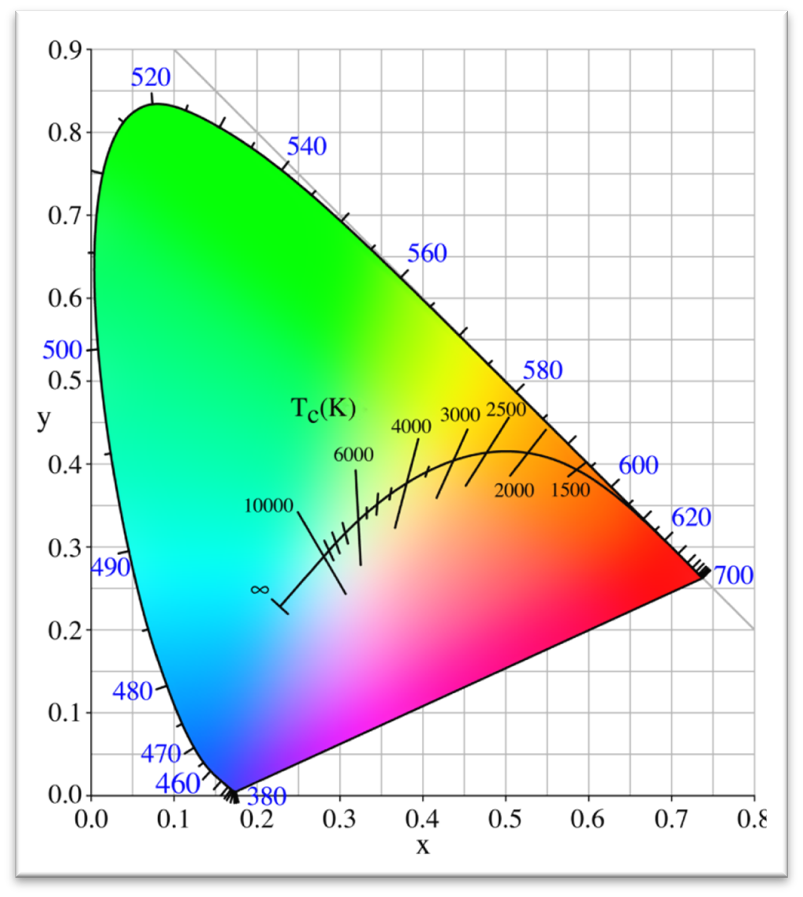
At a technical level, P7 color matching is based on the CIE 1931 chromaticity diagram, a standardized model for describing color as x,y coordinates. Each projector has a native color performance defined by its measured values, the raw output of the optical engine as calibrated in the factory. Color matching is achieved by aligning these projectors to a shared set of desired values, representing a common color space that all units can reproduce simultaneously. In practice, this means slightly constraining each projector’s native gamut to arrive at a common gamut that is identical across the system.
All Norxe projectors are fully calibrated during manufacturing, but for multi-channel systems we go a step further. Factory Color Match allows projectors to be ordered pre-matched in batches, using matched optical components and a common calculated color space before they ever leave the factory. These projectors ship with color correction enabled and a shared target color space already applied, providing a consistent baseline from day one.
Tell me more…
Oops! We could not locate your form.
It’s important to be clear about what this does and what it doesn’t. Factory color matching cannot compensate for mechanical installation variables such as lens tolerances, screen material, projection geometry, or environmental conditions. Final system-level alignment may still be required on site using tools such as Unify Desktop. However, by removing projector-to-projector variation from the equation, factory matching significantly reduces the scope and time required for on-site color alignment.
The result is faster commissioning, more predictable outcomes, and visuals that look intentional rather than “close enough”. In demanding applications, that consistency is what turns multiple projectors into a single seamless visual system.